How Attic Mold Removal Protects Your Home’s Foundation
Mold is an insidious and often hidden threat to your home’s structural integrity, and it can cause significant damage over time if left unchecked. While many people associate mold with damp basements or bathrooms, the attic is one of the most vulnerable areas in a home for mold growth. Attic mold, when not properly addressed, can cause cascading problems that eventually threaten the very foundation of your home. The process of attic mold removal is not only about eliminating unsightly spores but also plays a crucial role in protecting your home’s foundation.
In this article, we’ll explore how attic mold removal can protect your home’s foundation, the risks associated with mold growth in the attic, and the importance of addressing mold at its source to safeguard your home’s structural integrity.
Understanding the Link Between Attic Mold and Home Foundations
At first glance, it may not be immediately apparent how attic mold could threaten your home’s foundation. After all, the attic is typically far removed from the concrete or stone foundation beneath your home. However, mold in the attic can trigger a series of events that ultimately affect the foundation and the home as a whole. To understand the relationship, we need to explore how mold grows, the underlying conditions that support mold growth, and the far-reaching consequences that can result from ignoring attic mold.
The Growth of Mold in the Attic
Mold is a type of fungus that grows in damp, humid, and poorly ventilated spaces. Attics are particularly susceptible to mold growth due to a combination of factors such as:
- Poor Ventilation: Attics often have limited airflow. Without proper ventilation, warm, moist air from inside the house rises into the attic, where it meets cooler surfaces, causing condensation. This creates the perfect environment for mold to grow on wooden beams, insulation, and drywall.
- Roof Leaks: Roof leaks allow rainwater to infiltrate the attic, leading to moisture buildup. If not addressed promptly, these leaks create persistent moisture problems that encourage mold growth.
- Temperature Fluctuations: Attics are subject to extreme temperature changes, particularly in regions with cold winters and hot summers. The difference in temperatures causes condensation to form on surfaces like rafters and insulation, which can lead to mold growth.
- High Humidity: If the attic is poorly insulated or there’s insufficient sealing around the roof or vents, high humidity can accumulate in the space, further promoting mold growth.
Once mold begins to grow, it spreads quickly, producing microscopic spores that become airborne. These spores can then travel throughout the attic, into the living spaces below, and, over time, contribute to the weakening of the home’s structure.
How Attic Mold Affects the Home’s Foundation
While it might seem like mold in the attic is isolated to the uppermost part of your home, it can still impact the foundation through a series of interconnected issues. Let’s break down the potential consequences.
Increased Moisture Levels That Penetrate the Home’s Structure
One of the most direct ways that attic mold can affect your home’s foundation is through moisture. Mold thrives in damp environments, and attic mold often signals that there is an underlying moisture problem, such as roof leaks, condensation, or insufficient ventilation. When left unchecked, this moisture doesn’t just stay confined to the attic—it can seep into other areas of the home, including the walls and floors.
- Spreading Moisture: If there’s a persistent moisture problem in the attic, it can result in water running down into the walls and potentially down into the foundation. The walls, ceiling beams, and insulation can absorb this moisture, weakening their structural integrity. Over time, this can lead to wood rot, corrosion of metal elements, and damage to the flooring and foundation.
- Condensation in the Lower Levels: When warm, moist air from the attic finds its way into the living spaces below, it can cause condensation on cooler surfaces, such as floors and walls. This excess moisture can then contribute to the formation of mold on lower levels of the home, including basements and crawl spaces—further adding to the problems impacting the foundation.
Wood Rot and Structural Damage
Wooden components in the attic—such as beams, rafters, trusses, and even the roof framing—are particularly susceptible to mold growth, as mold feeds on organic materials. Prolonged exposure to moisture and mold can cause these wood elements to weaken and decay. As these structural components degrade, they lose their strength and stability, which can result in damage to the overall structure of the home. Over time, this deterioration of the wood can cause significant shifts in the home’s framework, placing strain on the foundation.
- Sagging and Shifting: As the structural elements in the attic deteriorate, the weight of the roof and upper floors may shift. This shifting can cause uneven settling of the home, leading to cracks and other issues in the foundation. As the building’s stability is compromised, the foundation may experience added stress, which could eventually lead to foundational cracks, settling, and even foundation failure.
- Undetected Roof Damage: Attic mold often results from roof leaks or poor insulation. Left unchecked, these roof issues can worsen over time, allowing water to penetrate the structure and further weaken the wooden supports. Water that seeps through the roof and into the attic can eventually find its way into the foundation if the problem continues to persist.
Increased Risk of Water Damage in the Foundation
When mold in the attic is caused by roof leaks or condensation, water is often the root cause of the problem. Water damage, if left unaddressed, can spread down through the walls and potentially into the foundation. If water continually infiltrates the attic, it can eventually lead to water pooling in the lower levels of the home, including near the foundation.
- Hydrostatic Pressure: When water enters the foundation, it can increase hydrostatic pressure—the pressure exerted by the water against the walls and floors of the foundation. This increased pressure can cause the foundation to crack, warp, or shift, compromising its structural integrity. Additionally, water pooling around the foundation can lead to soil erosion and further damage.
- Foundation Cracks: Consistent exposure to water can cause foundation cracks to form over time. These cracks create paths for moisture to seep deeper into the structure, which can cause even more damage to the foundation. If left untreated, the damage caused by water infiltration can become severe, requiring expensive repairs or even full foundation replacement.
Decreased Air Quality in the Home
Mold in the attic is not just an aesthetic issue; it can severely affect the air quality in your home. As mold grows and releases spores into the air, these particles can travel into the living spaces below through ducts, vents, and gaps in the attic. Poor indoor air quality can lead to health issues, including respiratory problems, allergies, asthma attacks, and other related health concerns. In the long run, poor air quality can lead to persistent mold growth throughout the house, compounding issues that can affect the foundation.
- Airborne Mold Spores: Mold spores are tiny and lightweight, making them easy to travel through the air and settle on surfaces throughout your home. They can also enter your HVAC system, circulating spores through the home and potentially causing widespread contamination. As the mold spreads, it contributes to the ongoing moisture problem, and increased humidity levels inside the home can lead to more structural issues.
How Attic Mold Removal Protects Your Home’s Foundation
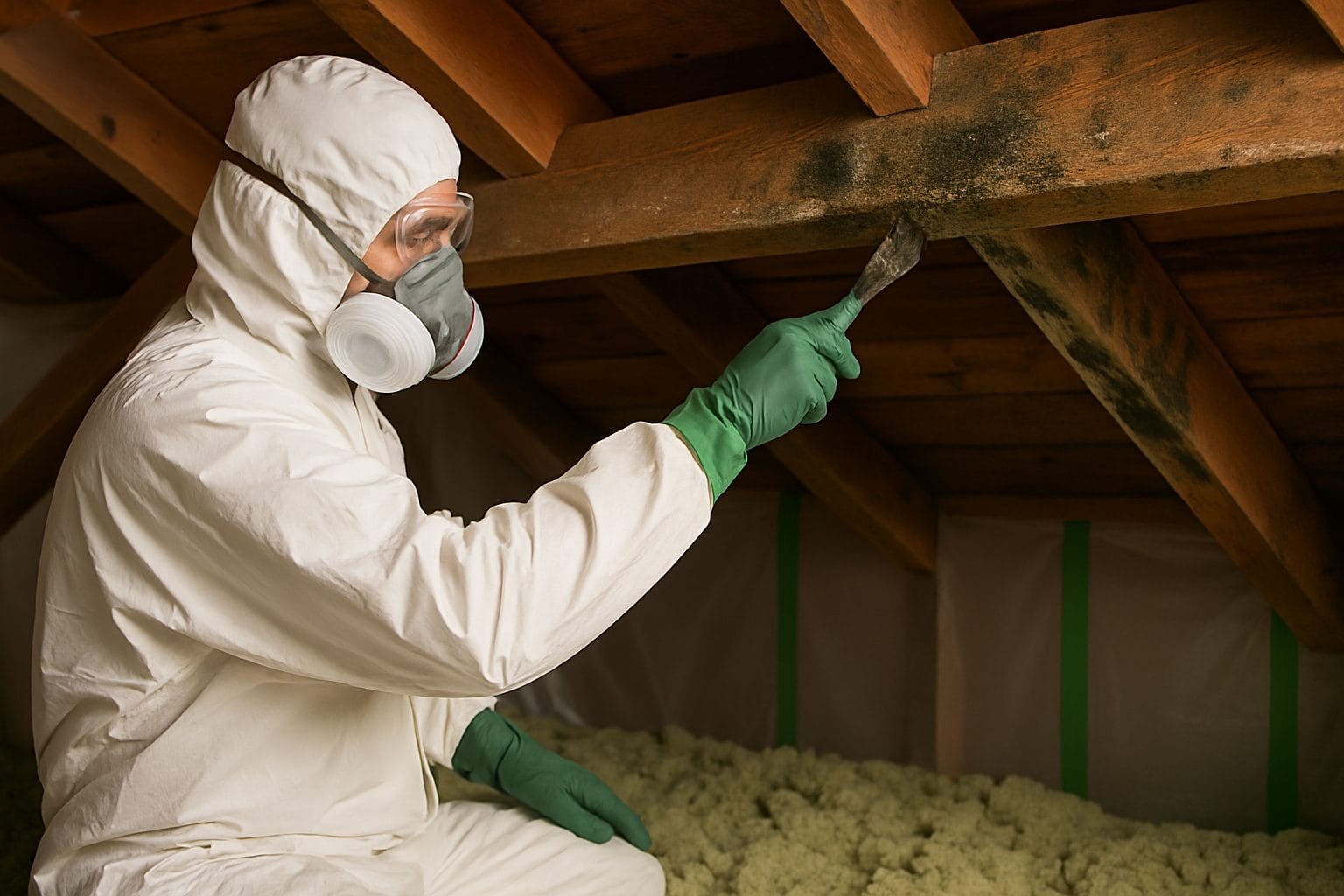
Addressing attic mold through professional mold removal services or even DIY efforts is an essential step in protecting your home’s foundation. Let’s explore how attic mold removal can help safeguard your home’s structural integrity:
Reducing Moisture and Preventing Further Damage
The primary benefit of Simons attic mold removal is the reduction of excess moisture in the attic and throughout the house. By eliminating mold, you are directly addressing the source of water infiltration—whether it’s a roof leak, poor ventilation, or condensation. Once the moisture source is controlled, there is less likelihood of it spreading to the lower levels of the home or penetrating the foundation.
Preserving the Structural Integrity of the Home
Removing mold from the attic also helps preserve the integrity of the wooden components that support your roof and upper floors. By ensuring that the attic structure is free from mold and moisture, you’re helping to prevent the wood from rotting and the beams from weakening. This, in turn, reduces the strain on the home’s foundation, keeping the building level and stable.
Preventing Foundation Cracks and Water Damage
By removing mold and addressing the underlying moisture problems, you can prevent further water damage from occurring in the foundation. Mold removal will often involve fixing roof leaks, improving insulation, and sealing any gaps that may allow water to infiltrate the attic and lower levels of the home. This helps reduce the risk of water pooling around the foundation, preventing cracks and the need for costly foundation repairs.
Improving Indoor Air Quality
Once attic mold is removed, the air quality in your home will significantly improve. By eliminating the mold spores that circulate through the house, you reduce the risk of respiratory issues and allergies. Proper ventilation and drying after mold removal will also help keep humidity levels down, creating an environment that is less conducive to future mold growth. A well-maintained attic will prevent mold from spreading, ensuring that your home remains healthy and breathable.
Preventing Further Mold Growth
A key element of attic mold removal is addressing the root cause of the problem. By fixing leaks, improving ventilation, and ensuring proper insulation, you eliminate the conditions that allowed mold to grow in the first place. This proactive approach prevents mold from coming back, which protects your home’s structure—including the foundation—from further damage.
Conclusion
Attic mold removal is not just about cleaning up a nuisance or getting rid of visible mold—it’s a critical process that protects the integrity of your entire home. Mold in the attic can lead to water damage, compromised structural components, poor air quality, and costly foundation repairs. By removing mold and addressing moisture issues, you are not only improving your living environment but also safeguarding your home’s foundation for the long term.
The process of mold removal involves more than just eliminating visible mold. It requires fixing the root causes of moisture, ensuring proper ventilation, and preventing future mold growth. By investing in attic mold removal, you can protect the foundation of your home and avoid extensive and costly damage down the line. Whether you choose to hire a professional mold remediation service or take a DIY approach, addressing attic mold promptly is the key to protecting your home’s structure and maintaining a healthy living environment.