
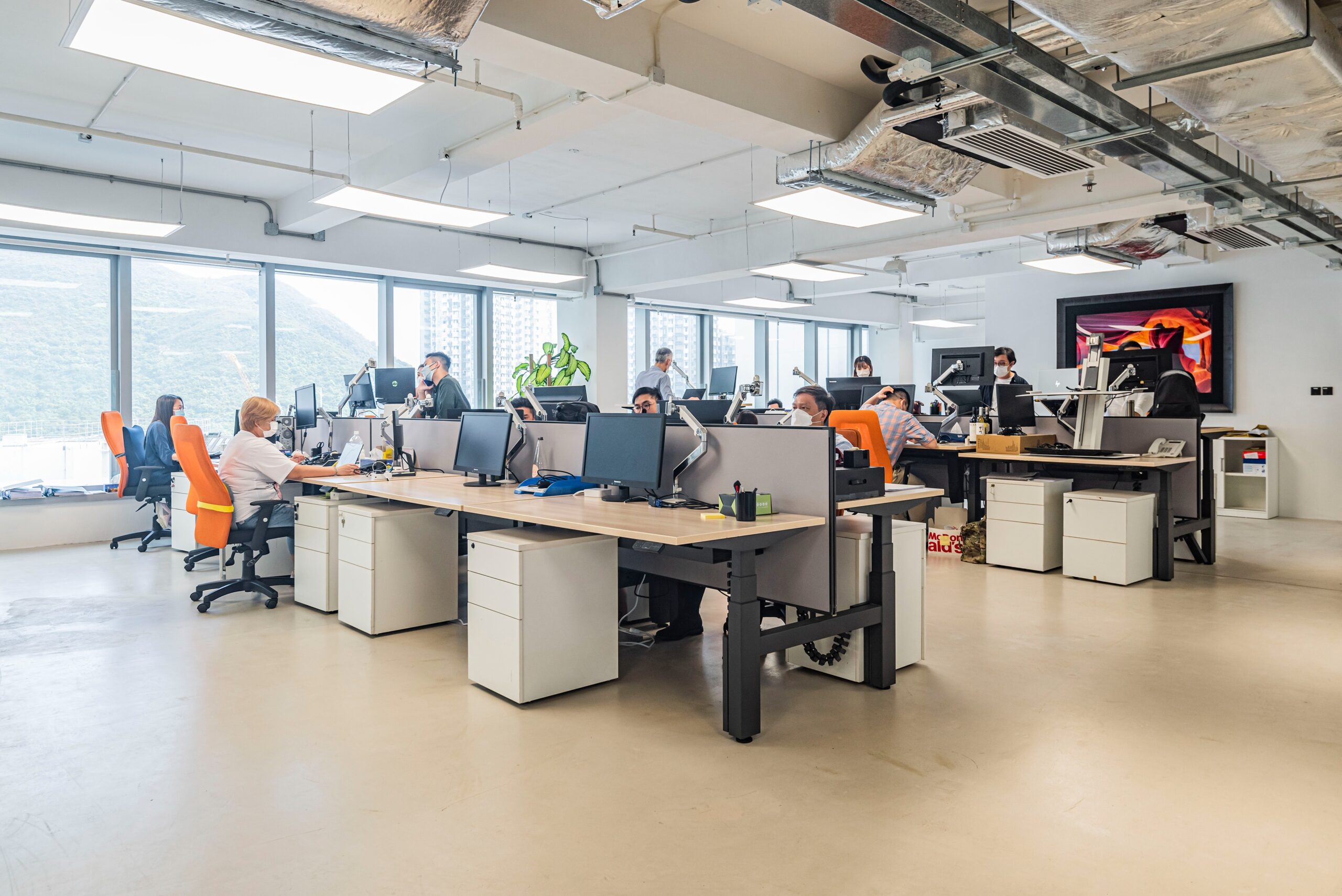
The Benefits of Open Concept Office Design
Office design has changed dramatically over the past two decades. What was once a maze of cubicles and closed-off meeting rooms has given way to open, flexible spaces built to encourage communication and creativity. For businesses looking to attract and retain modern workers, understanding the value of open layouts has never been more relevant.
Open concept offices remove physical barriers between employees, replacing private offices with shared spaces, collaborative areas and flexible seating. While the design comes with both advantages and challenges, many organisations across Australia have adopted it as part of broader workplace transformations, and the results speak for themselves.
What an open concept office really looks like
At its core, an open concept office replaces walls and cubicles with a connected layout where most employees share the same floor space. Clusters of desks, lounge areas, kitchen spaces and collaborative zones all coexist in one room, designed to encourage movement and interaction throughout the working day.
Getting the design right matters enormously. Businesses that invest in quality office fitouts in Wollongong or in their own city tend to see far better outcomes than those who simply remove walls without any strategic planning. A professional approach to layout, materials and furniture makes the difference between a vibrant and a chaotic workspace.
Not every business suits the same layout. A creative agency built around brainstorming benefits from open floor plans and casual seating, while a legal or financial firm may need a more structured approach with clearly defined quiet zones. Knowing your team’s workflow before committing to a design is essential.
Collaboration and communication across the team
One of the most cited benefits of open offices is improved communication. When team members sit near each other without walls in between, conversations happen naturally and quickly. Problems that might have required a formal meeting can often be resolved in seconds through a quick discussion across the desk.
Spontaneous collaboration tends to drive innovation in ways that scheduled meetings cannot replicate. When people from different departments share space, unexpected conversations happen. A marketing person might overhear a product discussion and offer a useful perspective. These informal exchanges are difficult to engineer deliberately but happen naturally in open environments.
Team cohesion also tends to improve when employees share an open environment. Workers who see their colleagues every day develop stronger working relationships than those isolated in private offices. A sense of shared purpose emerges when teams occupy the same space, which can positively affect morale and overall productivity.
Natural light and employee wellbeing
Open offices typically allow more natural light to reach all employees. In a traditional layout, only those with corner offices or window seats benefit from daylight. Removing walls means sunlight penetrates deeper into the floor plan, improving mood, energy levels and concentration for everyone sharing the space.
Research consistently shows that exposure to natural light during work hours improves sleep quality, reduces fatigue and increases alertness throughout the day. For businesses looking to invest in employee wellbeing, designing a workspace that maximises sunlight is one of the more cost-effective strategies available, with benefits extending beyond the office itself.
Open offices also give employees more opportunities to move around during the day. Without fixed walls defining where each person must sit, workers can choose different areas depending on the task at hand. This natural mobility reduces the physical strain of sitting in one position for extended periods.
Managing noise and maintaining focus
Noise is one of the most commonly raised challenges in open offices. Without walls to absorb sound, conversations and phone calls can become distracting for nearby colleagues. Smart acoustic design, including panels, carpeting, soft furnishings and dedicated quiet rooms, should be central to any open concept fitout plan.
Investing in your workspace is just one side of growing a business. For those also thinking about online visibility, running a focused link building campaign is one of the most effective ways to improve search rankings and attract new clients, complementing the professional impression your office already makes in person.
Flexible furniture also helps manage acoustics without sacrificing openness. Soft sofas, partitioned meeting pods and moveable shelving absorb sound while giving teams options for different types of work. A mix of communal open areas and smaller breakout zones provides variety without undermining the collaborative spirit the design is meant to foster.
Technology that supports an open office
Technology plays an important role in making open offices function well. Fast and reliable Wi-Fi, sufficient power outlets and cloud-based tools that allow employees to work from any desk are all essential. A well-equipped open office removes the technical friction that can make flexible working frustrating for everyone involved.
Video conferencing capabilities are also increasingly important as hybrid work becomes more common. Open offices need spaces properly equipped for virtual meetings that do not disturb the broader team. Soundproof booths and small enclosed meeting rooms within an otherwise open layout strike the right balance between accessibility and privacy.
Making the transition smoothly
Moving to an open plan layout requires more than a renovation — it also calls for cultural change. Employees accustomed to private offices may resist the transition, particularly if they handle sensitive or complex work requiring deep concentration. Involving staff in the planning process early helps manage expectations and build genuine buy-in.
Phased transitions can ease the shift considerably. Rather than overhauling an entire floor at once, some businesses start by converting a single area before expanding. This gives employees time to adjust and allows managers to identify what is and is not working before committing to a full-scale change.
Clear guidelines about noise levels, desk etiquette and the use of shared spaces make open offices more pleasant for everyone. When expectations are communicated clearly from the outset, and when leaders model the behaviour they want to see, open workspaces tend to function smoothly and sustainably over time.
Open concept office design is not a one-size-fits-all solution, but for many businesses it represents a significant upgrade over traditional layouts. The benefits to collaboration, communication, wellbeing and morale are well documented, and with the right planning and professional input, the transition can be both smooth and genuinely rewarding.