
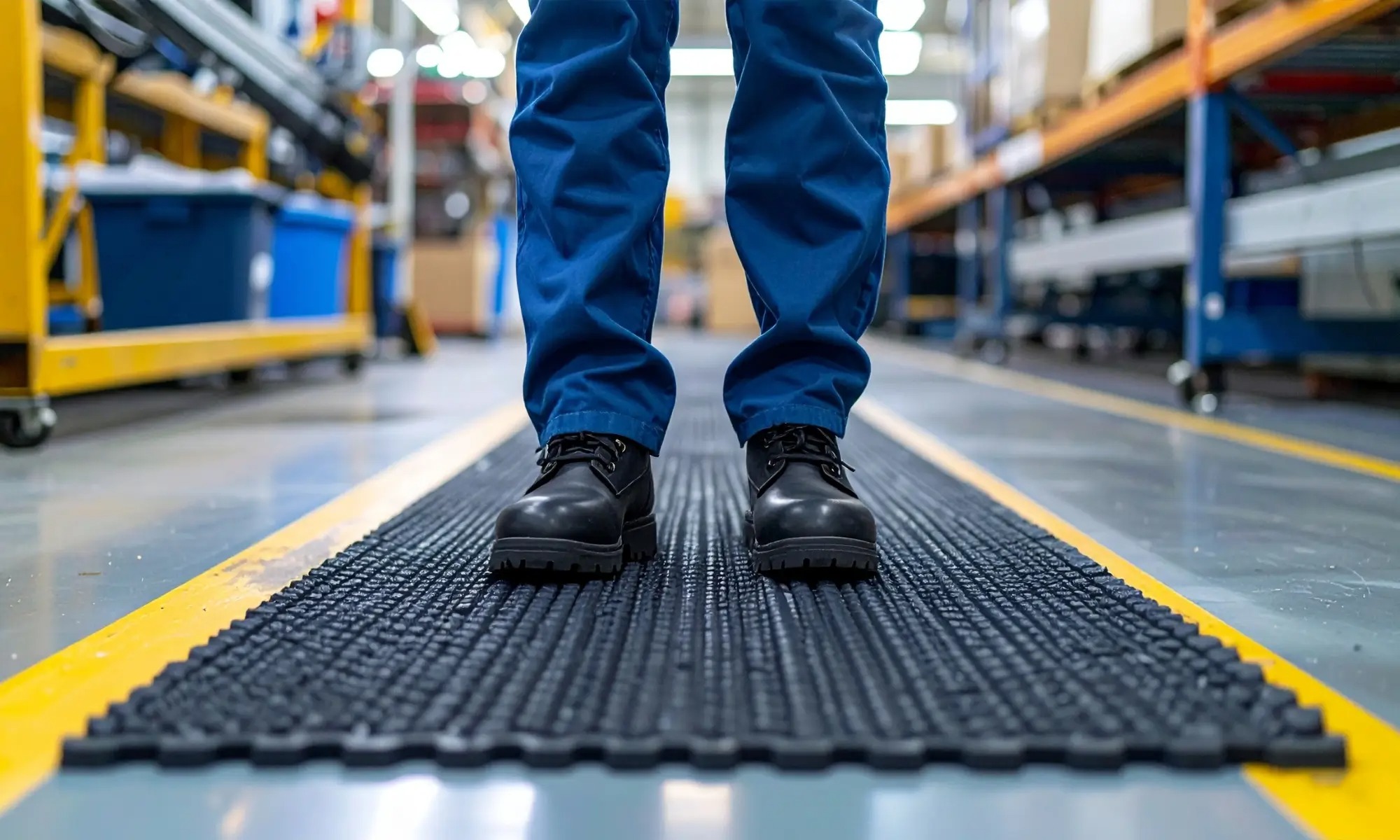
Why Safety Mats Matter in the Modern Office
Workplace safety is often discussed in terms of heavy industry and construction sites, but the modern office carries its own range of hazards that are easy to overlook. Slips and falls are among the most common causes of workplace injury across all industries, and in office environments, flooring plays a central role in preventing them.
Safety mats may not be the first thing that comes to mind when fitting out an office, but they serve a meaningful purpose in several key areas. From reception entrances to kitchen zones and workstation areas, the right matting can reduce injury risk, improve comfort and contribute to a more professional and considered workspace.
Understanding the risk of slips and falls
In Australia, slips, trips and falls account for a significant proportion of workplace injuries each year. Even in low-risk office settings, wet floors near entrances, hard smooth surfaces in kitchen areas and fatigue mats near standing desks all represent genuine hazards. The consequences of these incidents range from minor bruising to serious injury and lost work time.
Addressing these risks does not need to be complicated or expensive. Investing in appropriate office safety mats is one of the most practical and cost-effective steps any office can take. Products designed specifically for office environments provide grip, reduce fatigue and meet safety standards without disrupting the visual aesthetic of the space.
The risks are amplified in buildings with high foot traffic. Entrance mats in particular need to handle moisture effectively, especially during wet weather. Without adequate matting at building entry points, water is tracked across smooth flooring, creating hazardous conditions that expose both employees and visitors to the risk of falls.
Types of safety mats suited to offices
Entrance and scraper mats are among the most commonly used in office buildings. These mats sit at doorways and are designed to remove moisture and debris from shoes before people move further into the building. A well-chosen entrance mat can capture a significant amount of water and dirt before it reaches hard flooring surfaces.
Anti-fatigue mats are another important category, particularly for employees who spend long periods standing at sit-stand desks, reception counters or kitchen benches. These mats are engineered with cushioned materials that reduce the physical strain of standing by supporting the feet and encouraging subtle movement, which improves circulation and reduces discomfort.
Wet area mats designed for kitchen and bathroom spaces provide grip on surfaces that are frequently exposed to water. Unlike standard floor coverings, these mats are constructed with drainage capability and non-slip backing, making them suited to areas where spills, splashes and condensation are part of the everyday environment.
Ergonomic benefits beyond basic safety
The health benefits of anti-fatigue matting extend beyond injury prevention. Research shows that standing on a cushioned surface rather than hard flooring reduces lower back pain, decreases leg fatigue and improves overall comfort during extended standing tasks. In office environments where adjustable desks have become standard, anti-fatigue mats are a natural companion.
Creating a comfortable and visually appealing workspace involves more than just safety. Many offices also invest in their aesthetics, incorporating quality wall art to create a welcoming environment. Exploring modern poster art Australia is one way offices are adding character and personality to their interiors while keeping the space professional and visually cohesive.
For employees dealing with existing musculoskeletal concerns, supportive flooring solutions can make a meaningful difference in daily comfort. Occupational health specialists increasingly recommend anti-fatigue matting as part of a broader ergonomic assessment, particularly in workplaces where employees rotate between seated and standing positions throughout the day.
Choosing the right mat for your workplace
Selecting the appropriate safety mat involves considering the specific conditions of each area in the office. High-traffic zones require durable materials that can withstand constant use without curling, cracking or losing their grip properties. Mats that shift or bunch under foot traffic create their own hazards and should be avoided regardless of their other properties.
Cleaning and maintenance requirements also factor into the decision. Some mats can be hosed down and dried quickly, while others require more careful handling. For busy office environments where regular cleaning is a priority, choosing mats designed for easy maintenance reduces both the effort involved and the likelihood that hygiene standards slip over time.
Aesthetic compatibility matters too. Safety mats have evolved significantly, and modern options are available in a range of colours, sizes and textures. There is no reason for safety products to look industrial or out of place. With the right product, an office can meet its safety obligations without compromising on the look and feel of the workspace.
Compliance and duty of care
Australian workplaces are governed by health and safety legislation that places a duty of care on employers to provide a safe environment for both employees and visitors. Identifying and mitigating slip and fall risks is part of that obligation, and using appropriate matting in relevant areas is a straightforward way to demonstrate active risk management.
Regular inspection of safety mats is part of maintaining compliance. Mats that have worn smooth, developed tears or lost their backing adhesion should be replaced promptly. A scheduled inspection programme ensures that matting remains effective and that any issues are identified and resolved before they become a safety concern for staff or visitors.
Safety mats represent a small investment with a potentially significant return. Preventing even a single workplace injury through appropriate flooring more than justifies the cost of quality matting across the entire office. For any business committed to looking after its people, reviewing its matting strategy is a practical and worthwhile step to take.